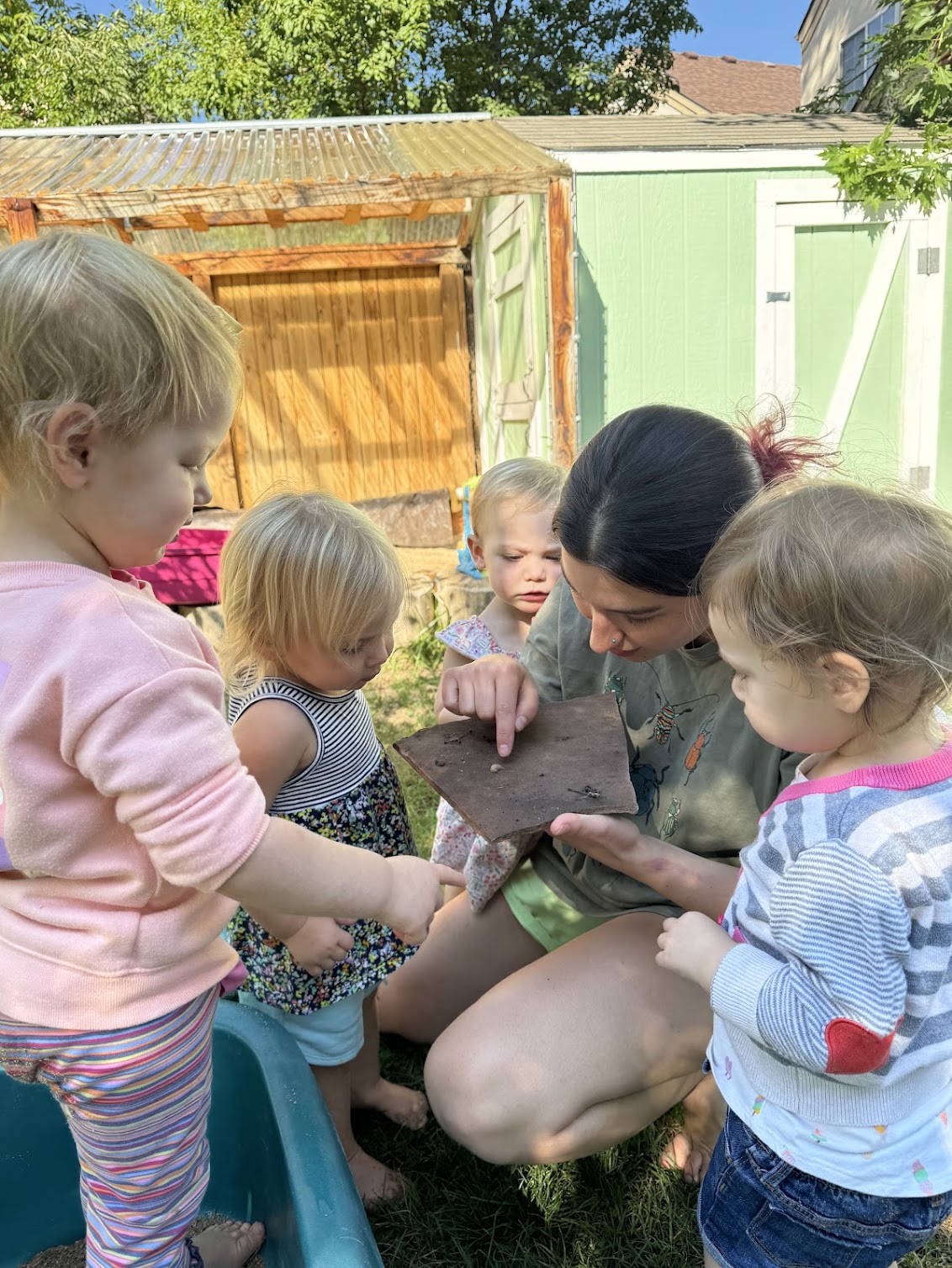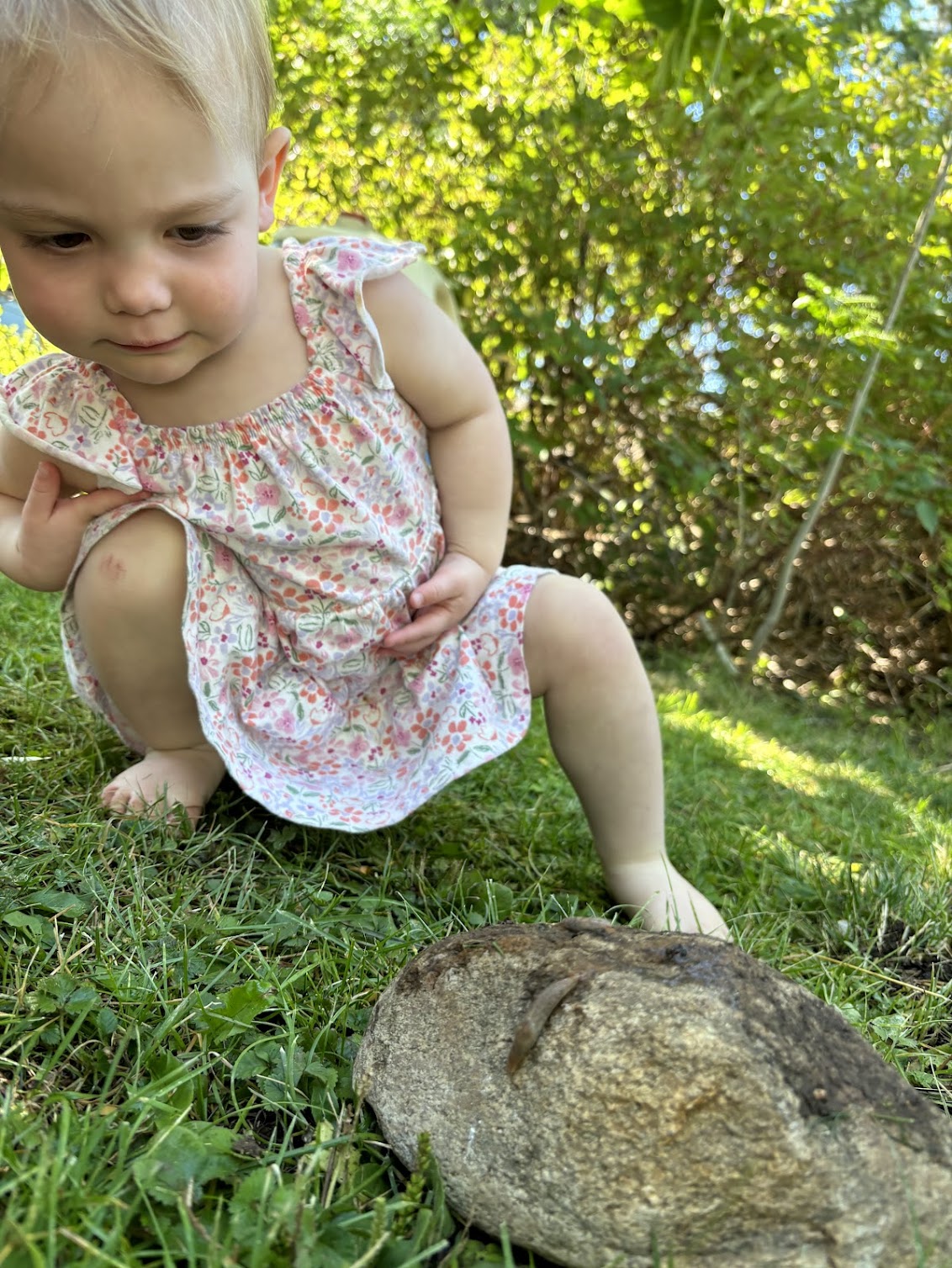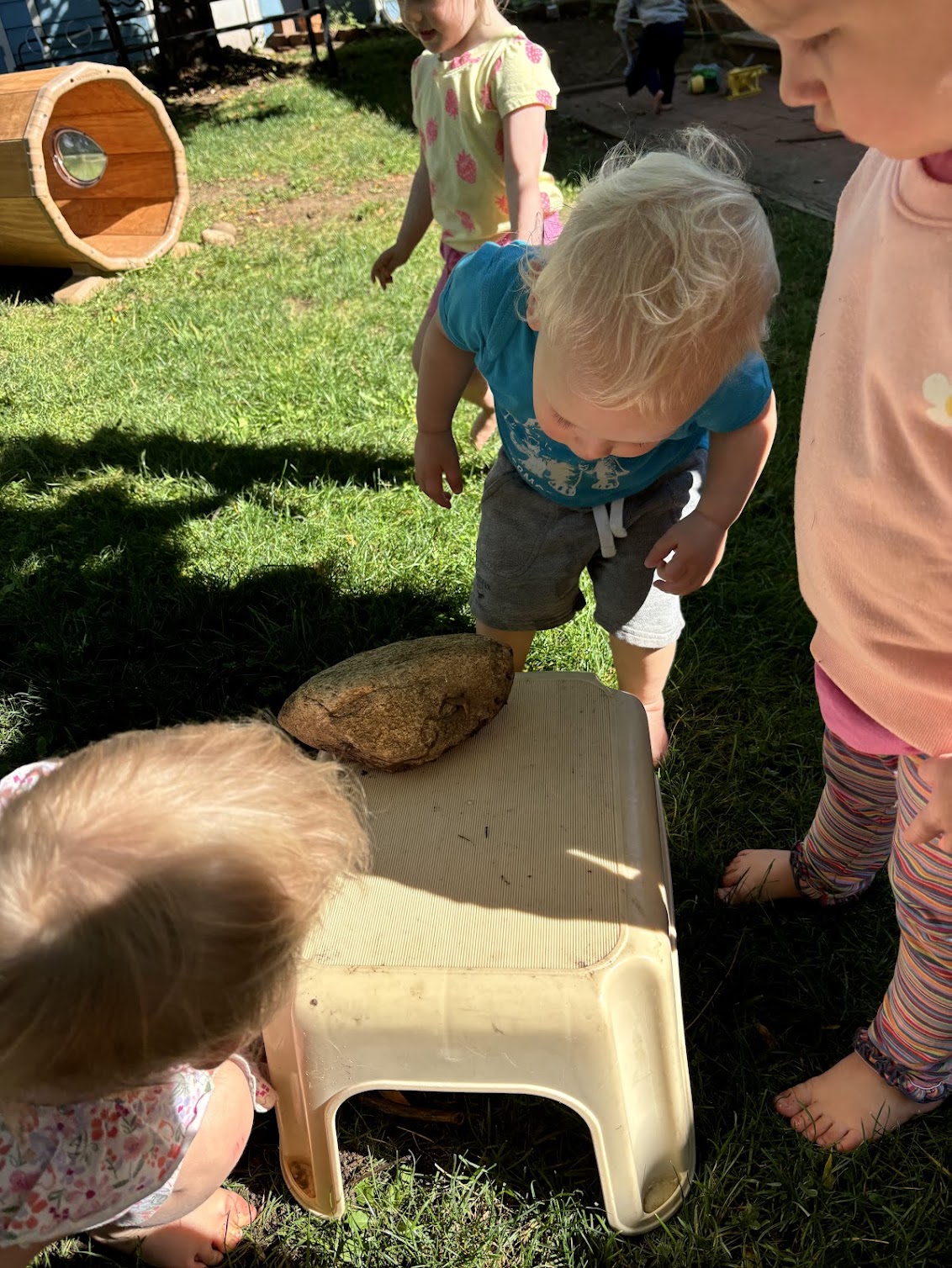
Something the toddler teachers have been working hard on is to not allow our own personal fears of bugs to translate to the way the children perceive and interact with bugs themselves. Teacher’s asked themselves “How can we model respect towards bugs that can translate to their everyday lives?”, “Why are bugs so scary to us?”, “How have adults’ perceptions of bugs impacted the children around them?”.
We saw the fruits of our labor on a cool September day in the toddler yard. Children were digging in the sand box, pushing carts, and teachers were observing. One child spotted something peculiar on the outer edge of the tunnel and came running to grab her teacher’s hand. She said “bee” and walked the teacher to the tunnel.
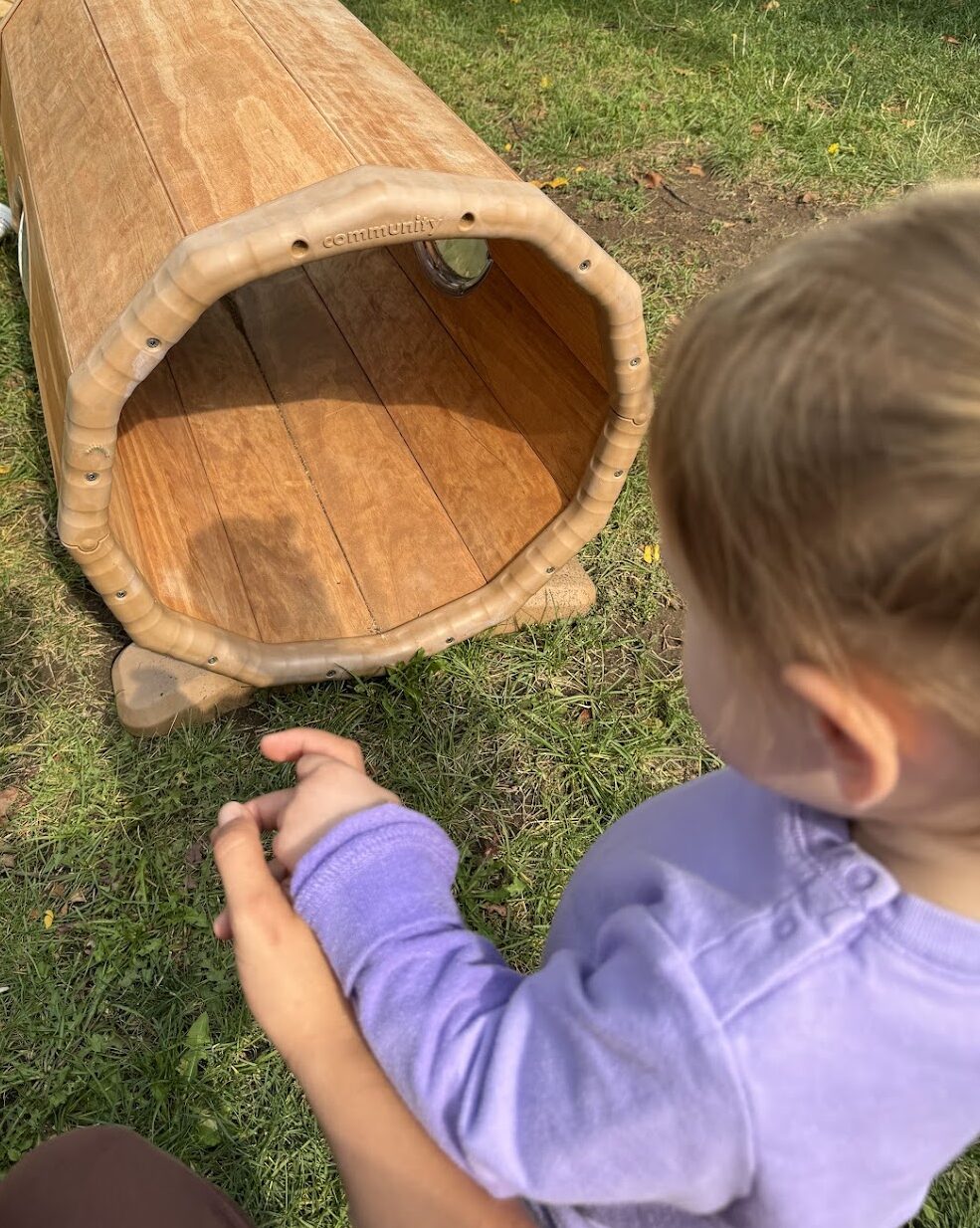
As they turned the corner to see the “bee” on the tunnel their teacher was delighted to see that instead of a bee it was a caterpillar. Tentatively, the teacher offered the caterpillar a finger to climb on. With the caterpillar on her finger many children began to gather around to see what they had found. We as teachers quickly pivoted our lesson plan for the day to revolve around the small creature we’d discovered. The teachers heard some children saying “cute”, “tiny baby” and “fuzzy baby”.
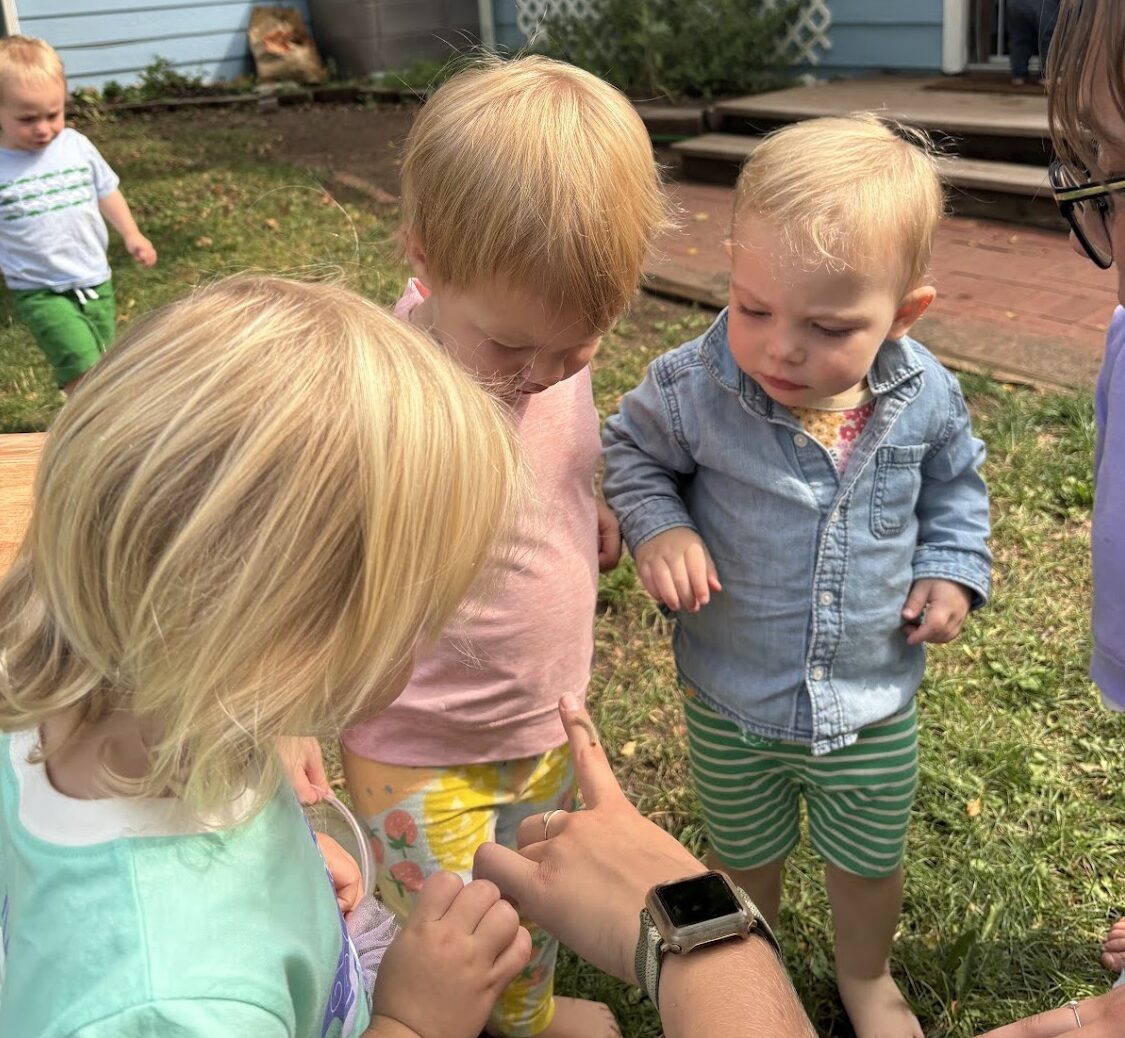
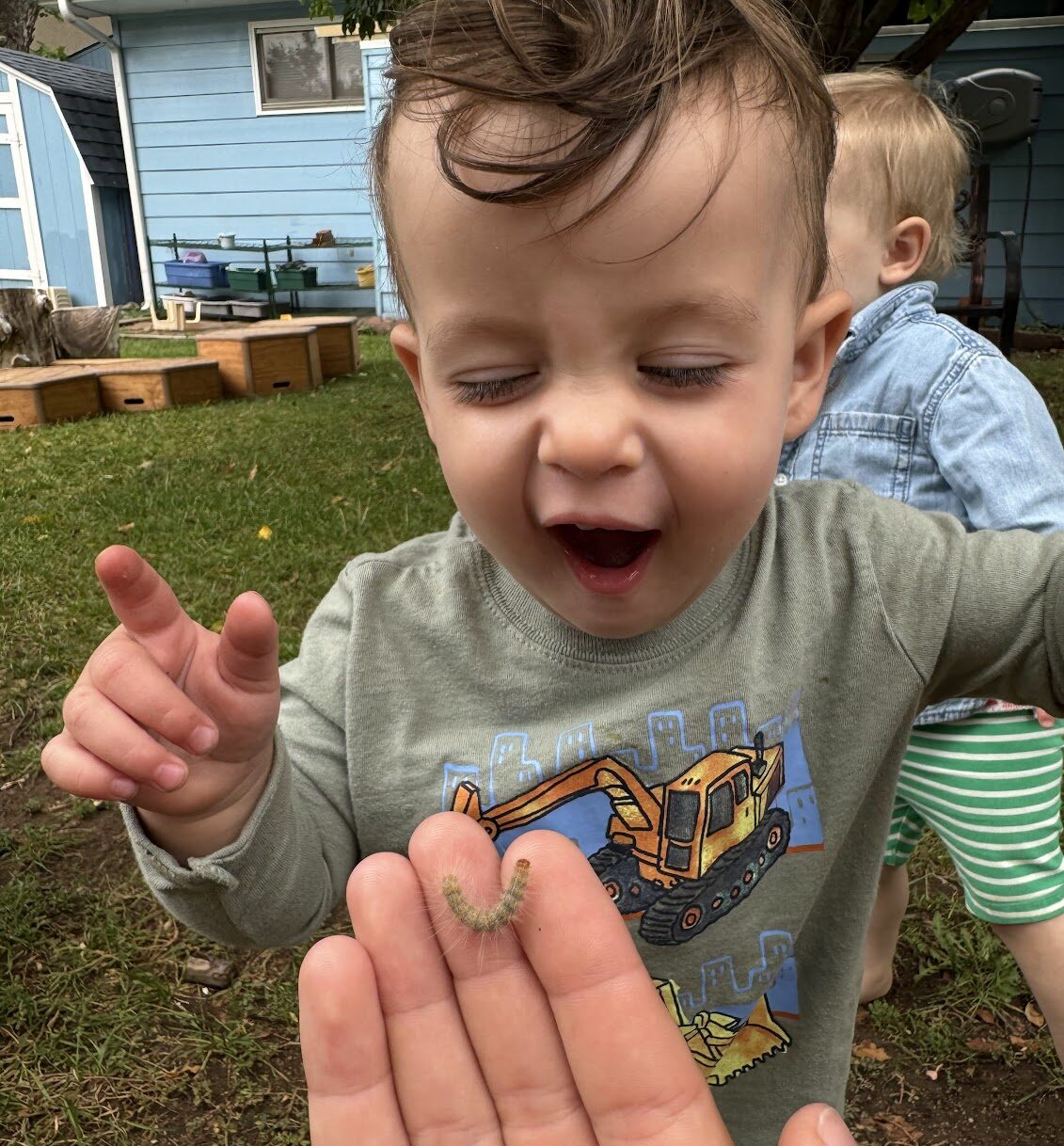
One teacher snapped a photo to look up what it was online. We discovered it would turn into a moth one day. We showed the children pictures of the moth and received back a small chorus of “moth, moth, moth!” The teachers began to explain how caterpillars build chrysalises and then emerge as beautiful moths and butterflies.
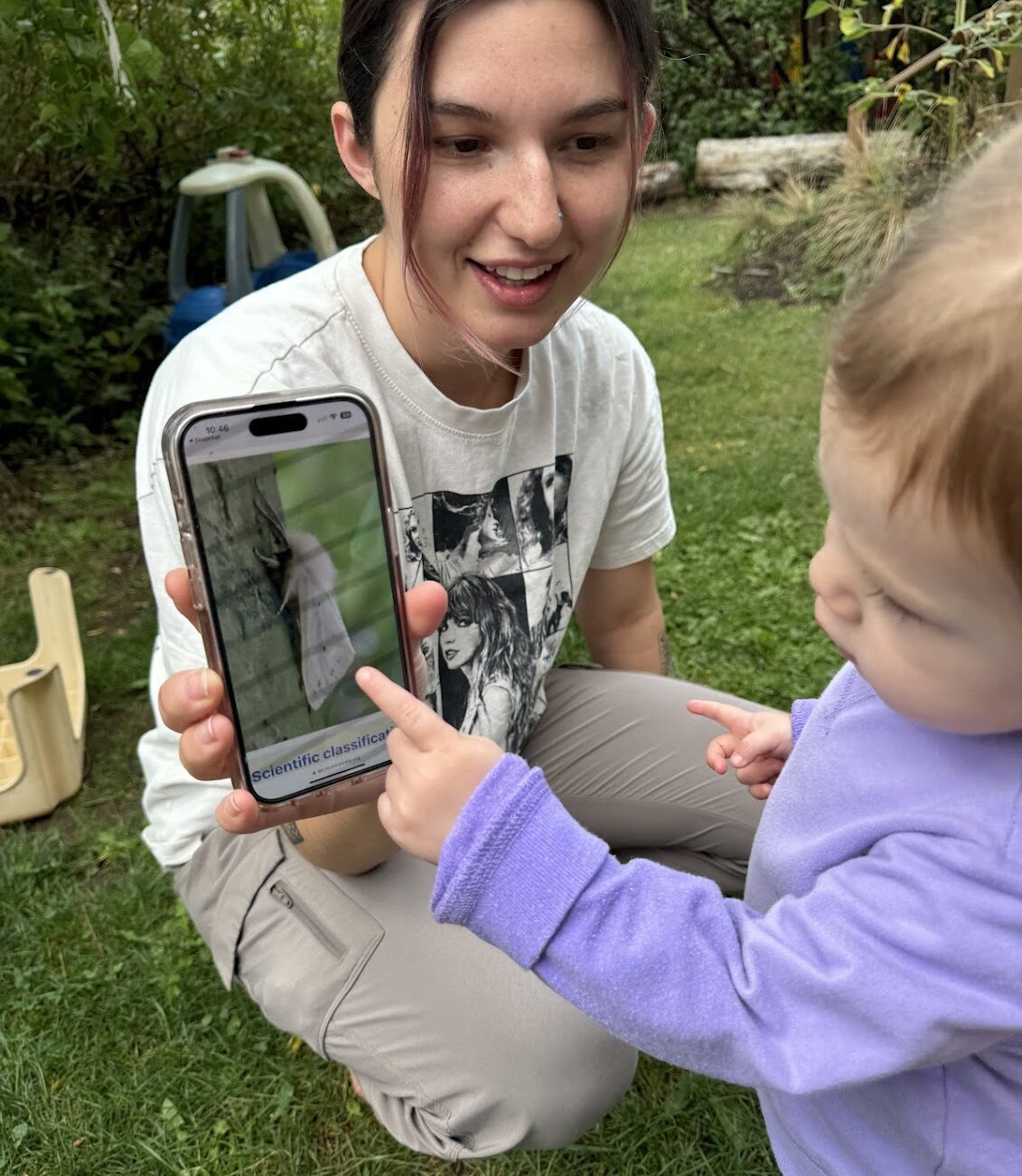
There was one child who worked extra hard to protect the caterpillar from others. In her quiet voice she reminded everyone to give the caterpillar “space” and even went so far as to put her body between the caterpillar and a child with a rock. She made sure the other children were respecting the small creature they were observing.
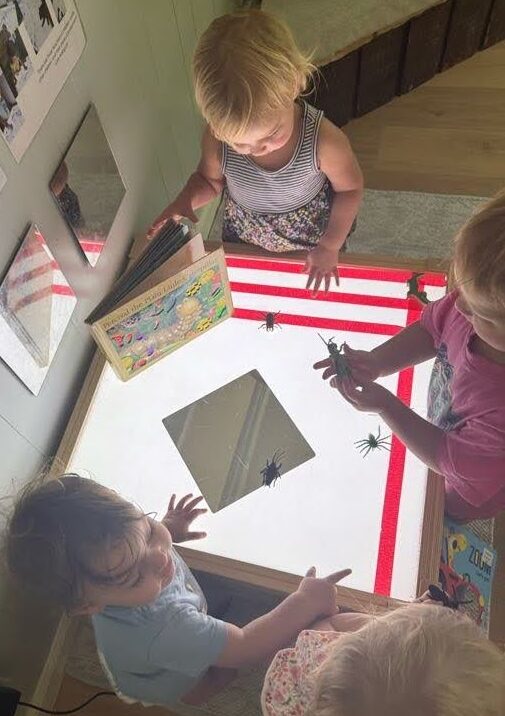
Later when the children woke up from nap there were books about caterpillars and other insects around the classroom for them to look at. Their light table which was previously home to Lego bricks had transformed into a bug habitat. The toddler teachers were working hard to continue the learning from the morning.
As the day was coming to a close, we had one final discovery, thanks to spider season. Suddenly a shout of “spider!” came up from the corner of the room. Teachers quickly helped the spider crawl into a plastic jar so that the children could observe while keeping the spider safe. In a surprise to their teachers, many children began blowing kisses to the spider.
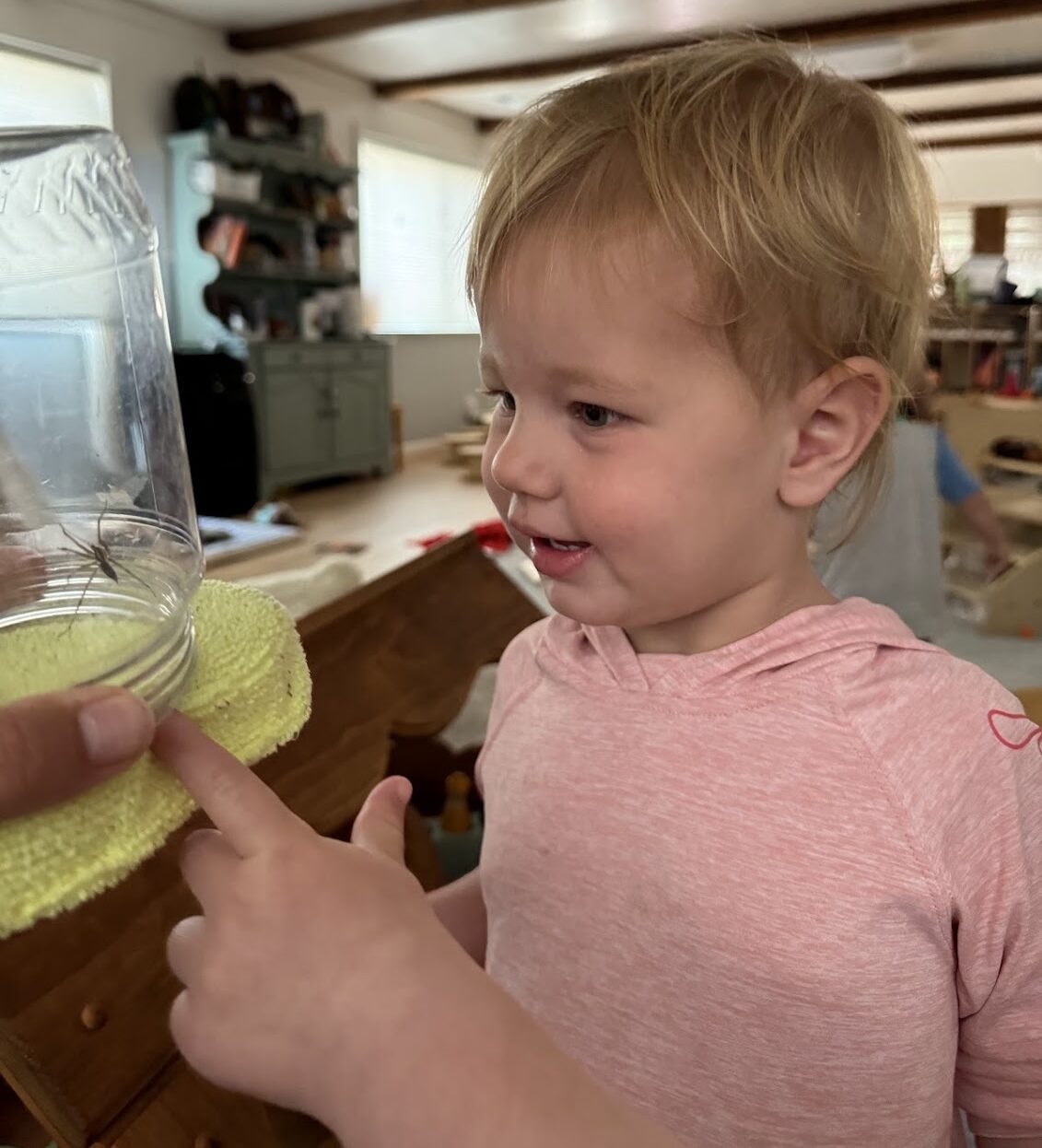
After this bug filled day and many days after, the toddler teachers noticed the children’s apprehension of bugs had dwindled and morphed into curiosity. We even overheard a child telling another “The bugs won’t hurt you. You’re safe.” We are so proud of this work we are doing with the children and it has been so exciting to see the ways this has transformed the way children use our outdoor classroom.
Often the first thing we hear as we head outside is children talking about wanting to find bugs. The toddlers have learned that they can pick up rocks to find snails, slugs, and rollie pollies. They know to look in the trees and bushes for bees and caterpillars. And many can now identify a beetle and describe its movement as crawling.