Summary
Over the past couple of months, we have seen an exciting growth in language in the toddler classroom. They are using more words to share their thoughts, needs, and ideas with one another. Language is emerging naturally through play and daily interactions, and we have included quotes from the children to highlight their voices and perspectives. It has been a joy to witness their growing confidence as communicators.
Language in The Landscape of Winter
As winter arrived here in Boulder and the frost began to settle in, we noticed something else shifting in our toddler classroom. Wrapped in coats and mittens, cheeks pink from the cold, the children have arrived each day with more to share, more to name, more to wonder about. While the trees were shedding their leaves for the cold, language began to bloom.
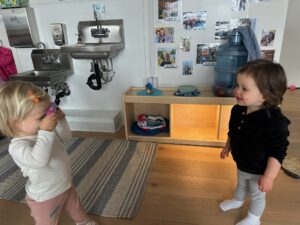
Stella says, “Clara pose”, she responds “Cheese! Posing!”
This stage of toddlerhood is a powerful window for language development. For months, the children have been taking in words, gestures, tone, and meaning. Their brains have been organizing this information and building pathways between experience and understanding. As these pathways grow stronger, their expression is beginning to catch up with comprehension. What can feel like a sudden burst of language to us is often the visible result of long, patient inner work for them.
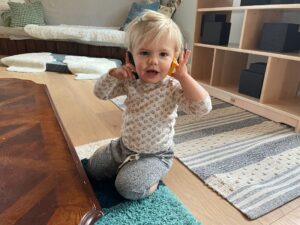
“Hello, who’s there? Dad?”
During this stage, toddlers begin to use language with greater intention. Words carry more meaning. Sounds are shaped with purpose. Some children begin to combine words into phrases, while others communicate through a rich blend of single words, gestures, facial expressions, and tone (and yes, volume!) Alongside this growth, they are developing an even stronger sense of self and relationships. They want to be understood and to participate fully in the world around them. Language has become an essential tool for connection!
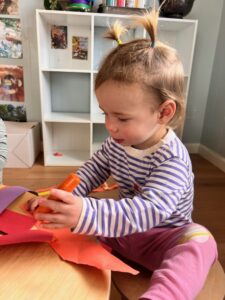
“Hadley makes marks! Marks!”
This growth is deeply rooted in the body. Movement plays an important role in brain development, including the areas that support speech, attention, and memory. When they climb, push, carry, and balance, they are strengthening coordination and body awareness. Fine-motor work in the hands, such as grasping, pulling, and manipulating objects, supports planning and sequencing. These physical experiences help prepare the brain for language to emerge.
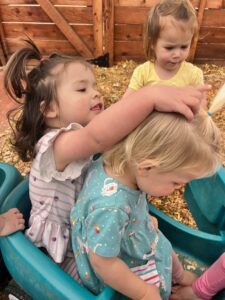
“Stella’s blue hair tie. One blue hair tie”
Winter offers especially rich opportunities for this kind of embodied learning. Walking through snow, pulling on boots, reaching into mittens, and adjusting layers all require effort, focus, and persistence (for everyone involved). These moments of problem-solving support the same skills they may use as they work to express their thoughts and feelings.
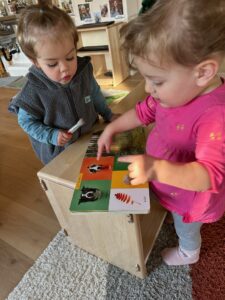
Yves says “Green, rouge!”, Lily says “Woof!”
In the classroom, we aim to support language development by slowing down and being fully present. During care routines like diapering and hand washing, we speak clearly and respectfully, naming actions, sensations, and feelings. These predictable, one-on-one moments help toddlers organize their experiences and practice the rhythm of back-and-forth communication. We also recognize that communication takes many forms. Words, gestures, eye contact, movement, and tone all carry meaning, and all are worthy of a response.
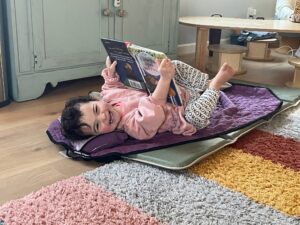
Jude laughs as she looks through a book while she settles down for nap (sensory exploration, cognitive growth, and building foundational literacy skills like turning pages and following text!)
As families move into winter break, many of you will have more time than usual to be together. They will use new words, repeat favorite phrases, watch your face closely as they speak, and at times express themselves with their whole body. You may also notice moments of quiet, as language integrates and settles. Everyday routines often invite the richest communication, especially when things feel unhurried.
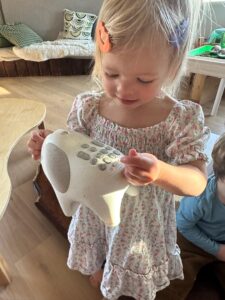
“It’s a little elephant”
.As this season begins, we invite you to slow down alongside your child. Talk about what you are doing together. Share observations. Read familiar stories. Listen with patience and respond with warmth. There is no need to rush or correct. Language grows through relationship, presence, and shared experience. We wish your family a restful and meaningful winter break. May this time together be filled with small moments, joyful laughter, and many opportunities to listen to the voices that are still emerging.
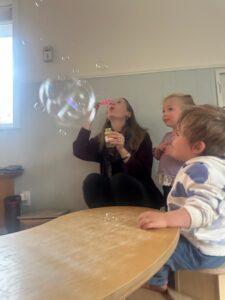
“Phoebe’s mama blow bubbles!”
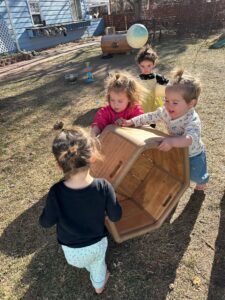
“Judey, come!!” “Coming!” “Charlie, push! Yves, push!” “Puuush muscles!”
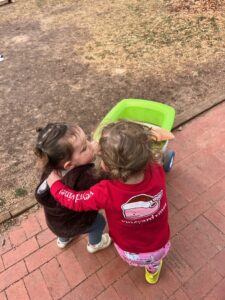
“Lily, help push”
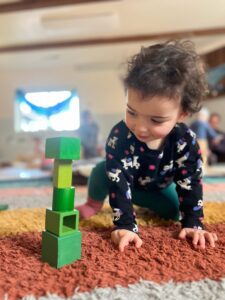
“Stack blocks… House!”