With winter among us, accompanied with darkness and cold we naturally turn inward to ourselves and our community. Although, anytime is a good time to be with your community, this season is especially important as we seek warmth wherever we can. And what better place to find it then among the people we love?
Why Having Meals Together is Important
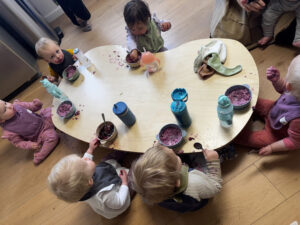
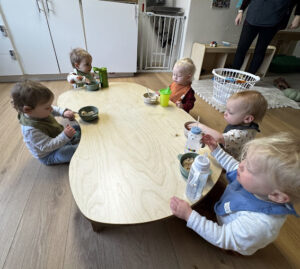
We use community meal times as an anchor for gathering and creating a sense of warmth and togetherness in our space. Meals are an opportunity for most of our class to sit around a table together and share an experience–whether that be trying new foods, exploring textures, or simply exchanging smiles and giggles.
Throughout history meals have been used to bring people together, celebrate diversity, make amends, and much more. We strive to bring that energy into our meal times and do exactly as they have done for centuries– support community development.
What Meals Look Like in Our Class
With the passage of time, our community is growing and evolving. We have been fortunate enough to see the children transition from bottles to a few bites of solid foods, to fully sitting up at the table on their own. It feels like every week we are inviting a new young friend to join us at the table.
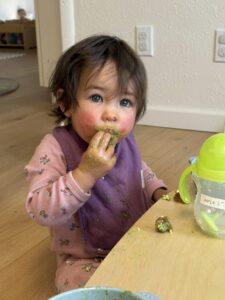
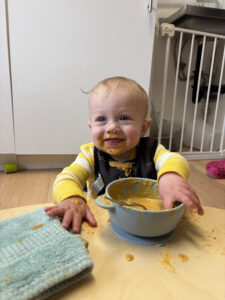 In the past month or so, Noah went from sitting in a teacher’s lap and trying a few bites of food to sitting independently and chowing down on a variety of foods. Now, we are seeing Elowen joining the table, with a teacher, stepping into the role that Noah was in not too long ago. Engaging in this new experience with the children has been so fun for the teachers as we watch how their facial expressions respond to new foods, lighting up with excitement for something they really like or expressing distaste for something that doesn’t hit their fancy as well.
 Other Benefits of our Meals
Not only have mealtimes been an opportunity to bring everyone together but they are also an important time for the children to work on the development of their fine motor and non-verbal communication skills.
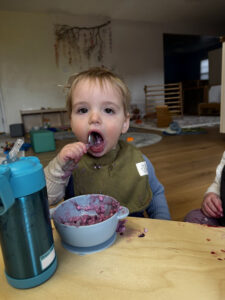 We are seeing the infants growing fine motor skills through the use of spoons. Our youngest friends have not quite grasped the spooning ability and often choose their hands while some of our older friends are slowly getting the hang of it, though sometimes it’s easier to scoop the food than it is to deliver it to the mouth.
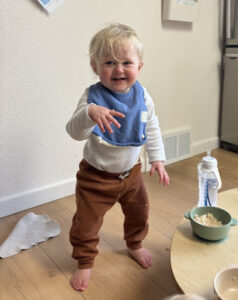
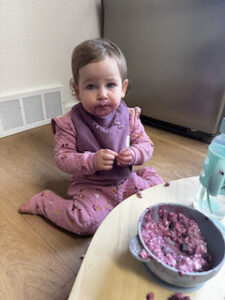
The children use their non-verbal communication, or sign language, to help us understand when they want “more” food or when they are feeling “all done”. Everyone has a slightly different variation of how they sign these words which never fails to make a teacher smile. These signs can also be easily transferred to different areas of their day proving to be invaluable in their communication at this time in their development.
We have been grateful for our shared mealtimes, an opportunity for everyone to nurture their minds and bodies and we look forward to seeing how these change as our class grows!