NOTES FROM THE DIRECTOR
Rethinking “Be Careful”
We all find ourselves saying it dozens of times a day: “Be careful!” It comes naturally because we love our children and want to keep them safe. Could those two little words actually be making things a bit harder for our little ones?
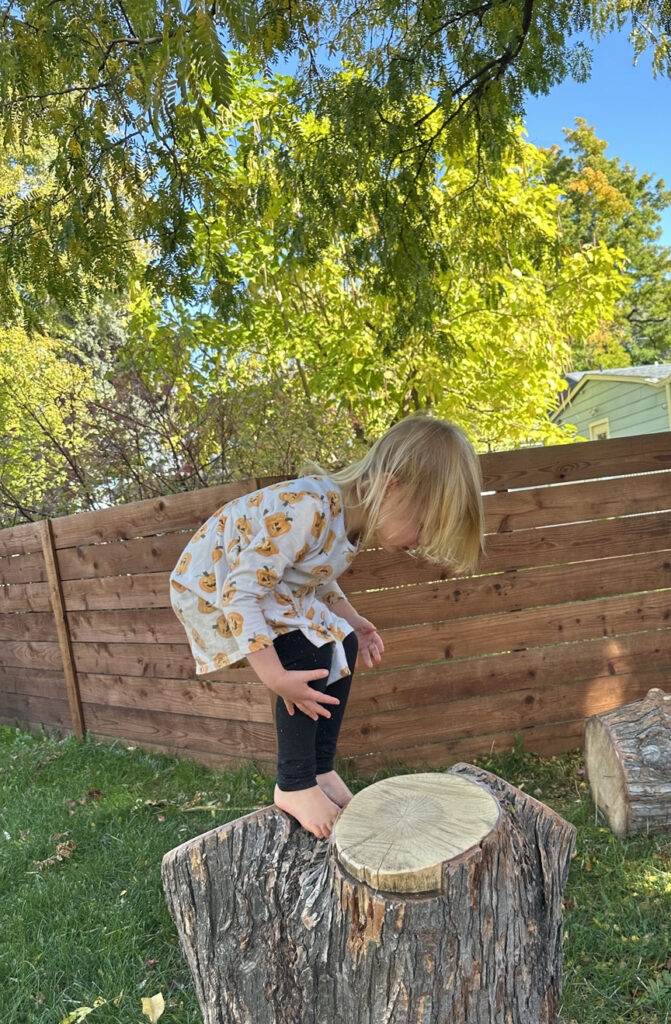
Think about those moments when a child is completely in the zone; maybe they’re balancing on a wobbly log, trying to carry a big branch, climbing up the Pikler Triangle for the first time, or carefully pouring their own milk. In those moments, their brains are working overtime! They are measuring distance, adjusting their balance, and solving problems in real time. When we say, “Be careful!” we might accidentally break that spell of concentration. Instead of helping them stay safe, our words can be a distraction from the very task they are trying so hard to master.
Why We Value “Risky Play” at Blue Leaf
You might hear us talk about risky play. This doesn’t mean we let things get dangerous; it means we give children the chance to try things that feel a little bit challenging. We want them to have environments where they can test their limits, build their confidence, and feel that amazing spark of joy when they master something tough. This is how they learn to trust themselves and make good decisions.
When we let them climb, jump, and explore, they aren’t just playing; they are growing in so many ways:
– Learning how their bodies move
– Developing better judgment
– Gaining real confidence
– Finding creative ways to solve problems
– Sticking with a task until it’s done
– Learning how to stay safe on their own
Children who get to practice these skills often end up being safer in the long run because they really understand what they are capable of. In RIE®, we never place a child in a position they could not get into on their own; this includes placing them high up on a play structure. If children can get into a spot or a position, they can often get out.
New Ways to Offer Support Instead of a quick “Be careful,” we can try using questions that help them think through what they are doing.
You might try saying
“I see you’re climbing really high!”
“What’s your plan for that next step?”
“Does that spot feel steady to you?”
“Where are you going to put your foot next?”
“I can see you’re really concentrating.”
“I’m right here if you need me.”
With our youngest learners, gentle physical cues like a light tap or a simple gesture can be wonderful tools for support. For instance, if a little one who is just starting to scoot has climbed onto a platform and is exploring near the side, you might say, “You are getting close to the edge.” By softly patting that space, you help guide their awareness to exactly where they need to focus. Using “sportscasting” in these moments can also be helpful, especially if the child needs more guidance.
These little shifts help keep their focus on the challenge at hand, rather than on our own worries!
The Power of Trust
When we slow down, watch, and trust what our children can do, we send them a very powerful message:
“I believe you are capable of figuring this out.”
Of course, we are always there to keep the environment safe and step in if something truly dangerous happens. But within those safe boundaries, our children deserve the chance to discover just how much they can achieve.
The next time you’re about to say “Be careful,” try to pause for a second and ask yourself: Are they in real danger, or are they just working hard on a new skill? Sometimes the best gift we can give them is our quiet confidence. When we trust them with meaningful challenges, they don’t just learn to be careful; they learn to be capable. If you would like to learn more about Risky Play, take a look at Rusty Keeler’s website:
https://rustykeeler.com/