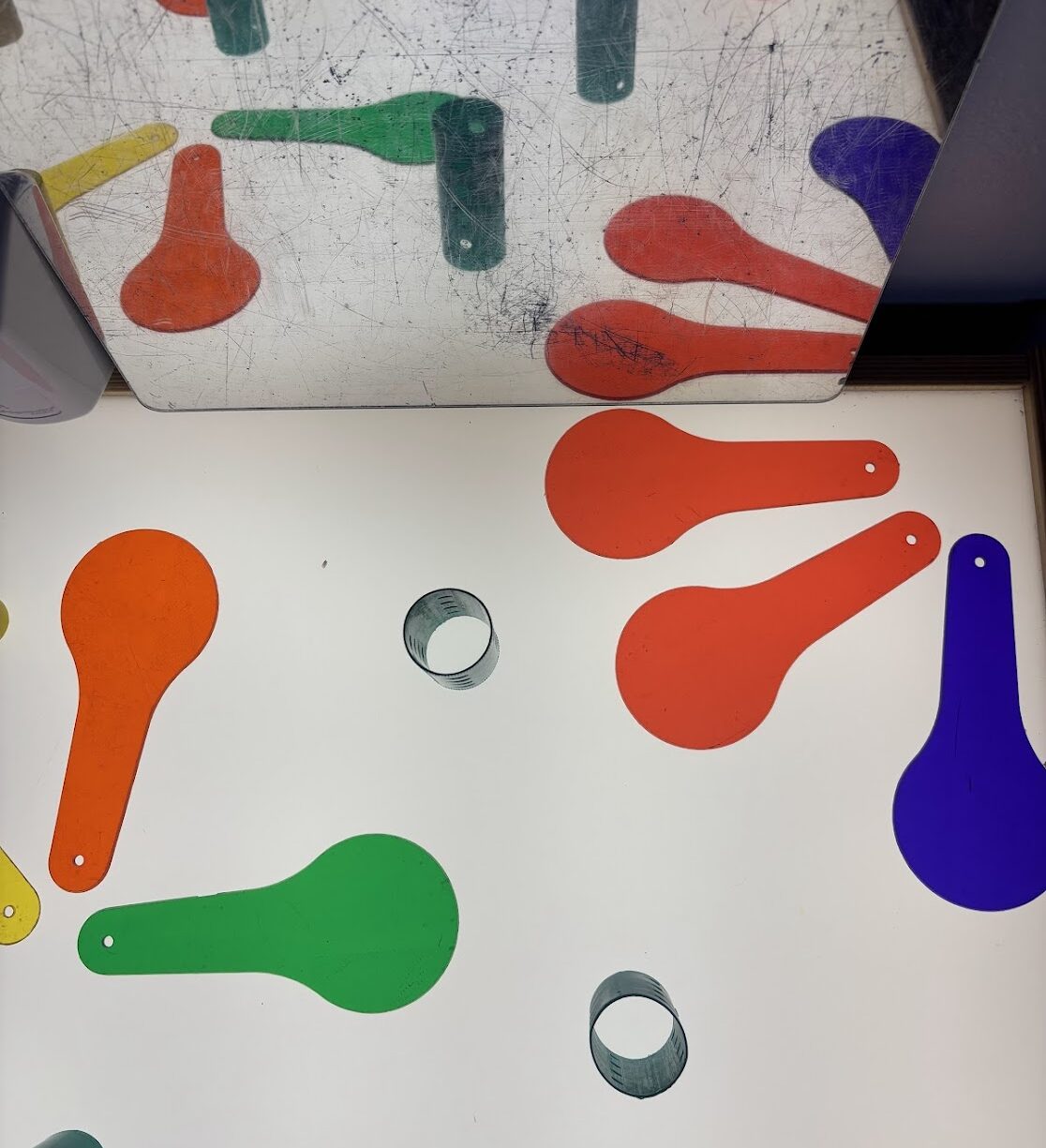
When the curler loose parts were first introduced in the classroom, the teachers’ intended to create a light scape of different shapes and textures. Anne however was quick to show us that even though she may have been invited in by the light, other characteristics of the curlers were much more intriguing.
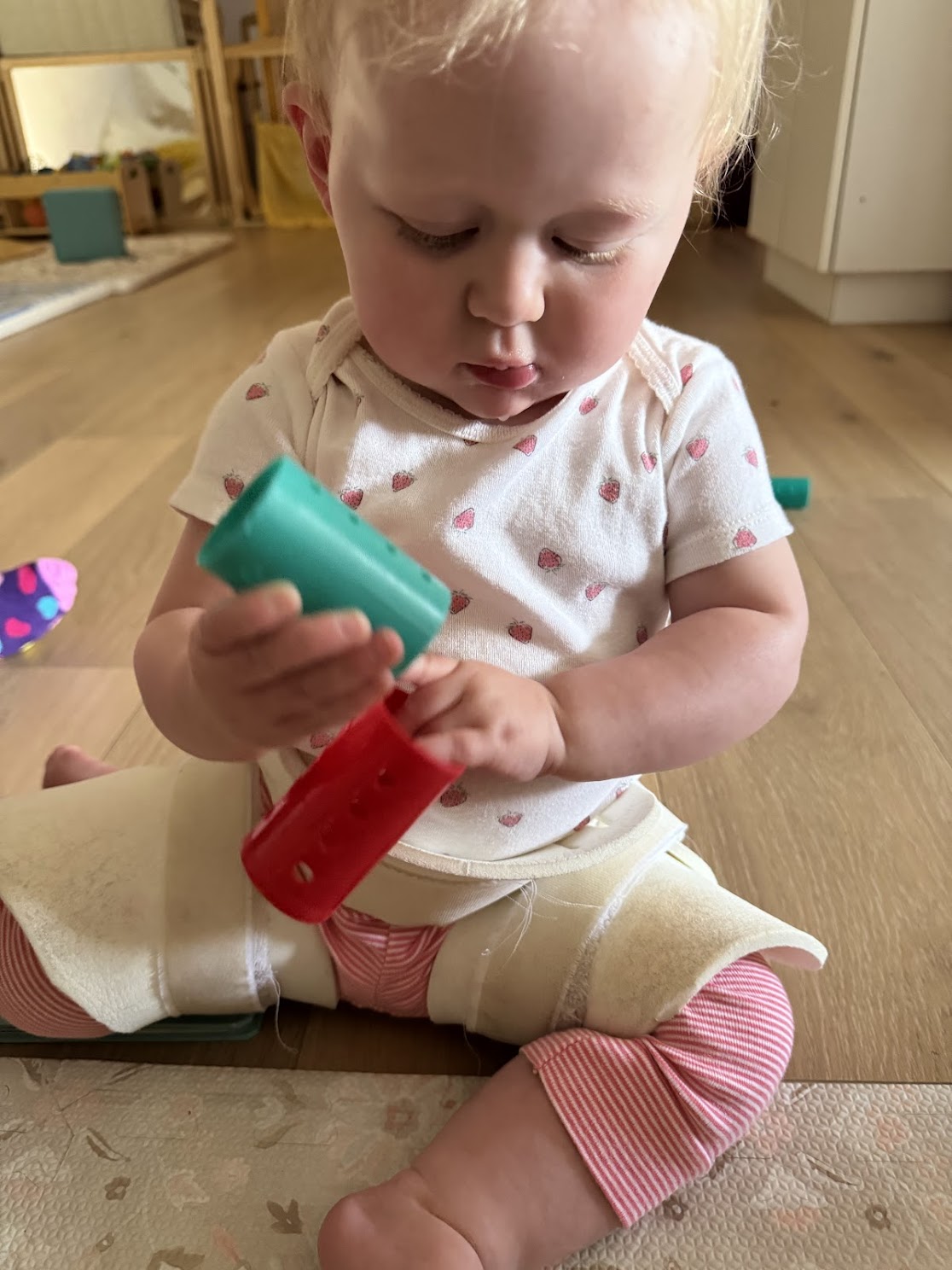
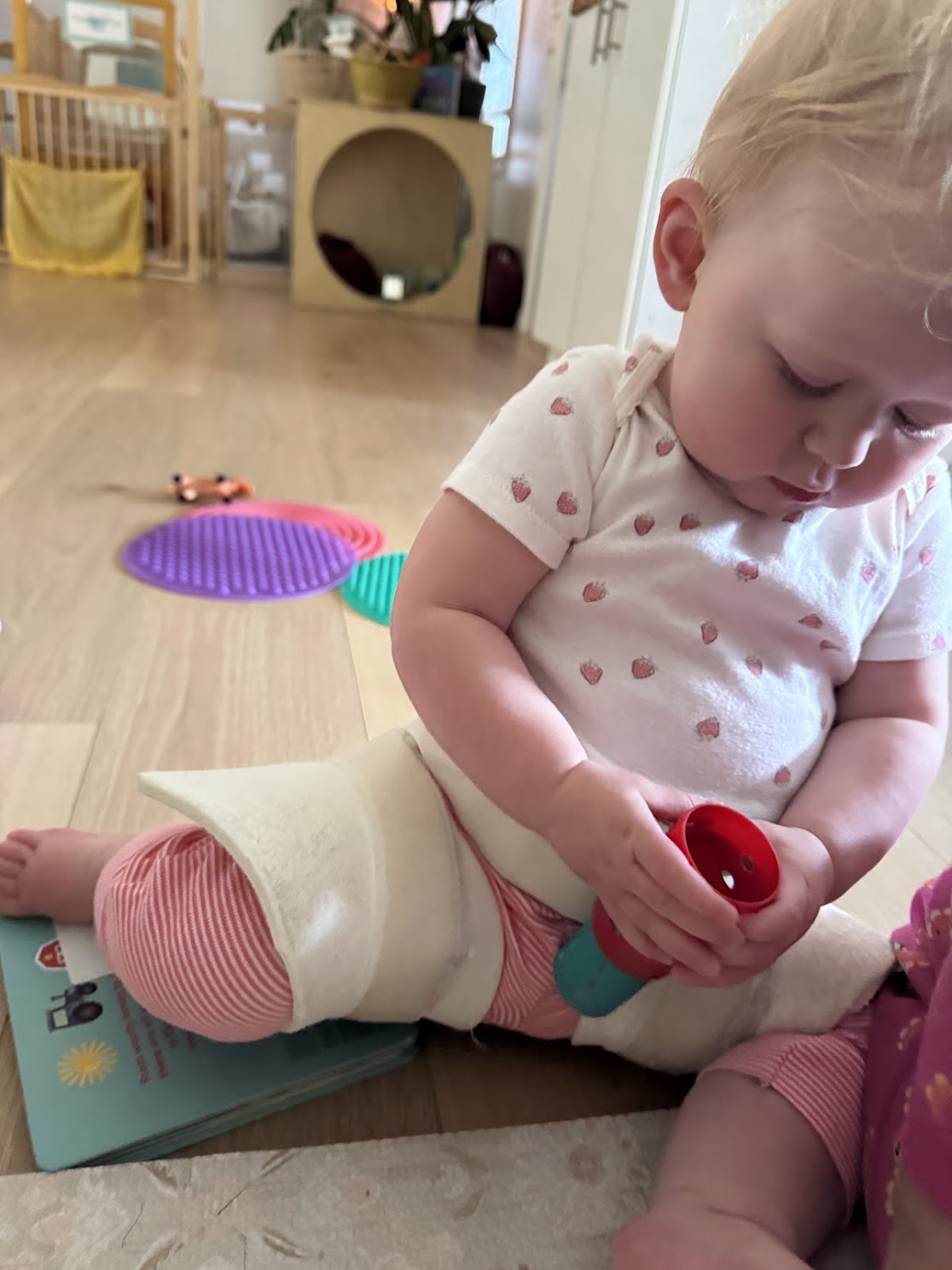
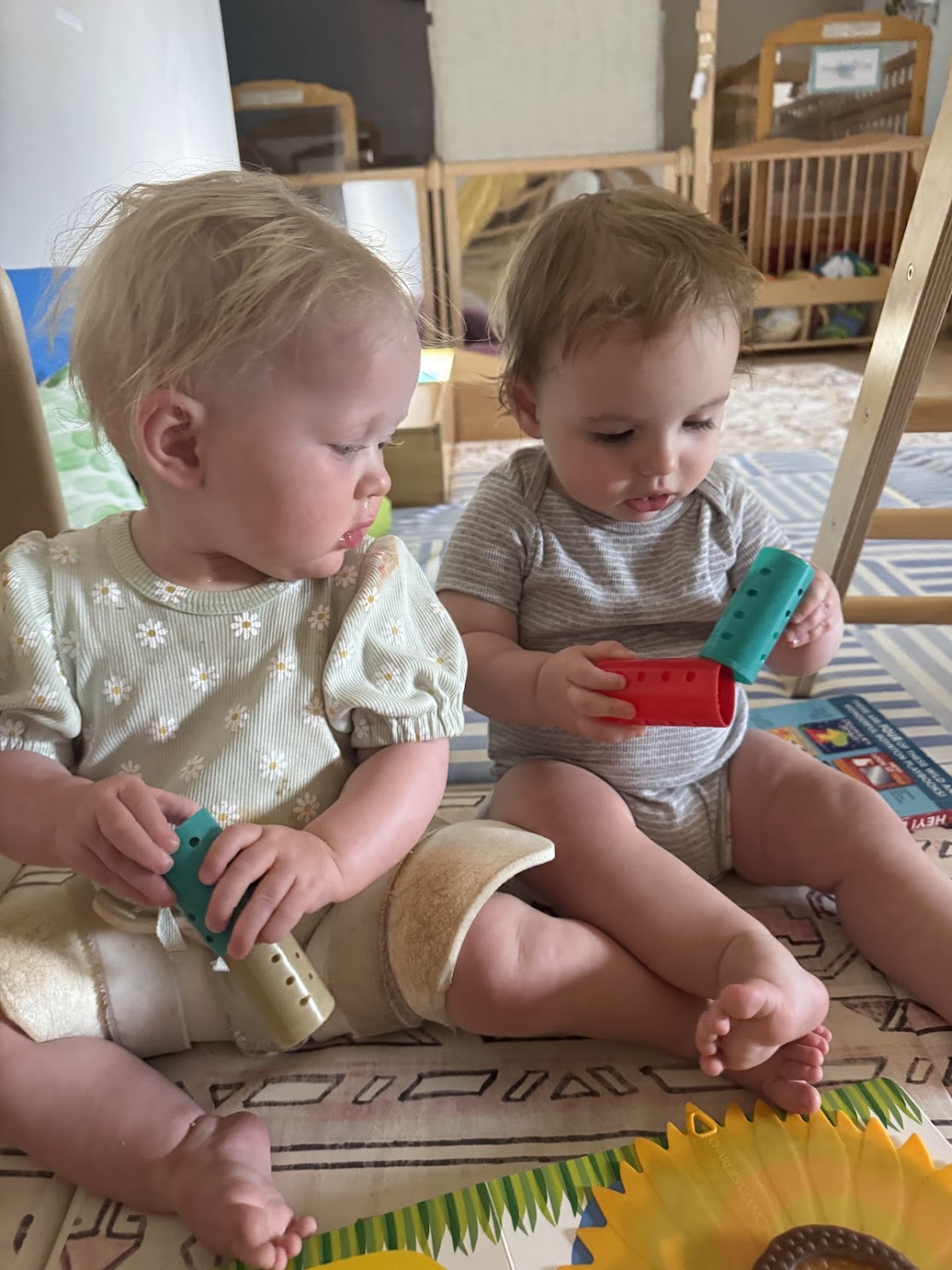
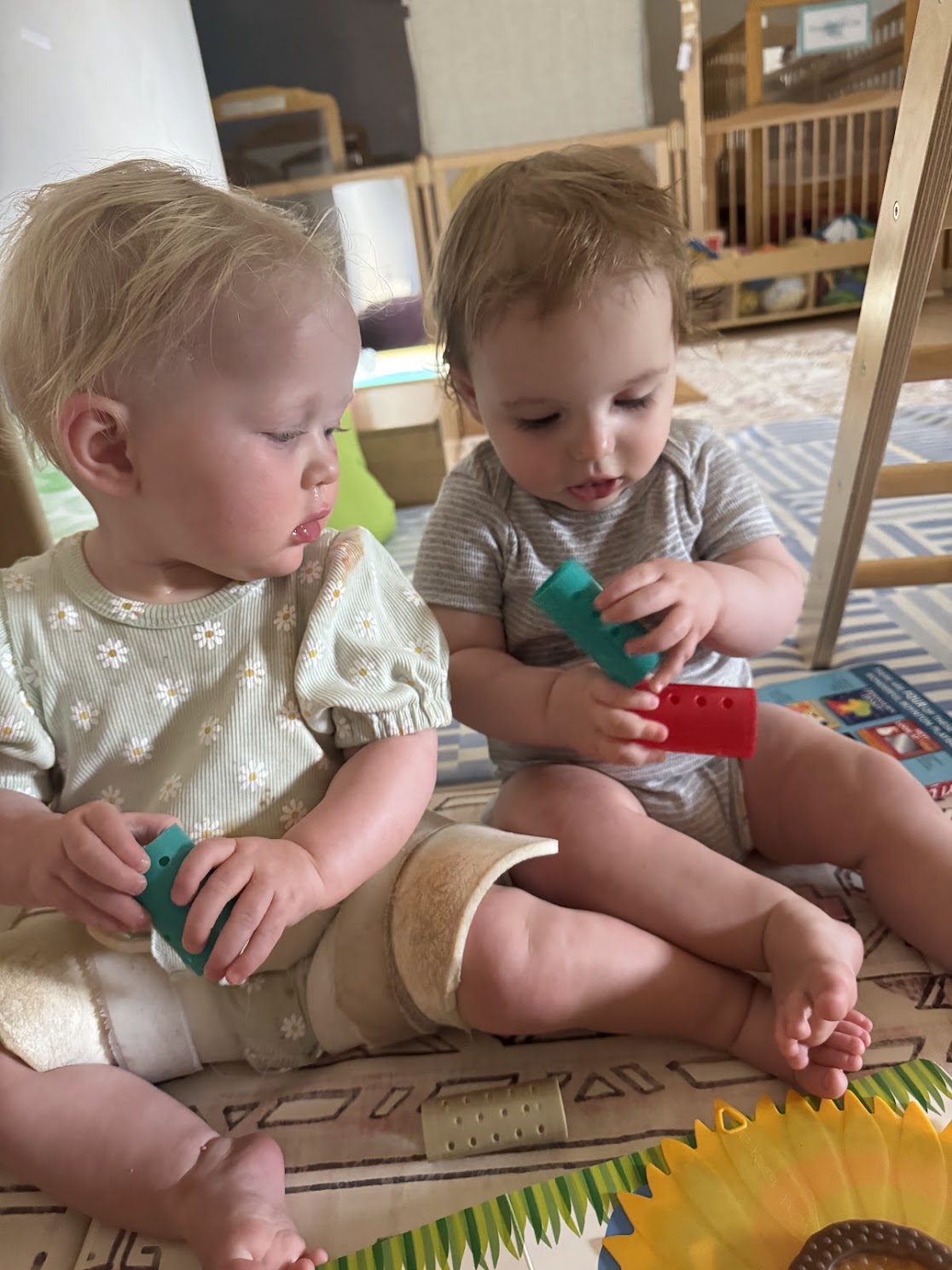
She sees the opportunity to combine the two materials by sliding one into the other, however her fingers keep getting in the way to start. Gripping one in each hand to combine them causes them to slip. She then leans the smaller one on her body to act as a stabilizer to solve this problem. Her fine motor skills allowed for deeper exploration of cause and effect and spatial relationships.
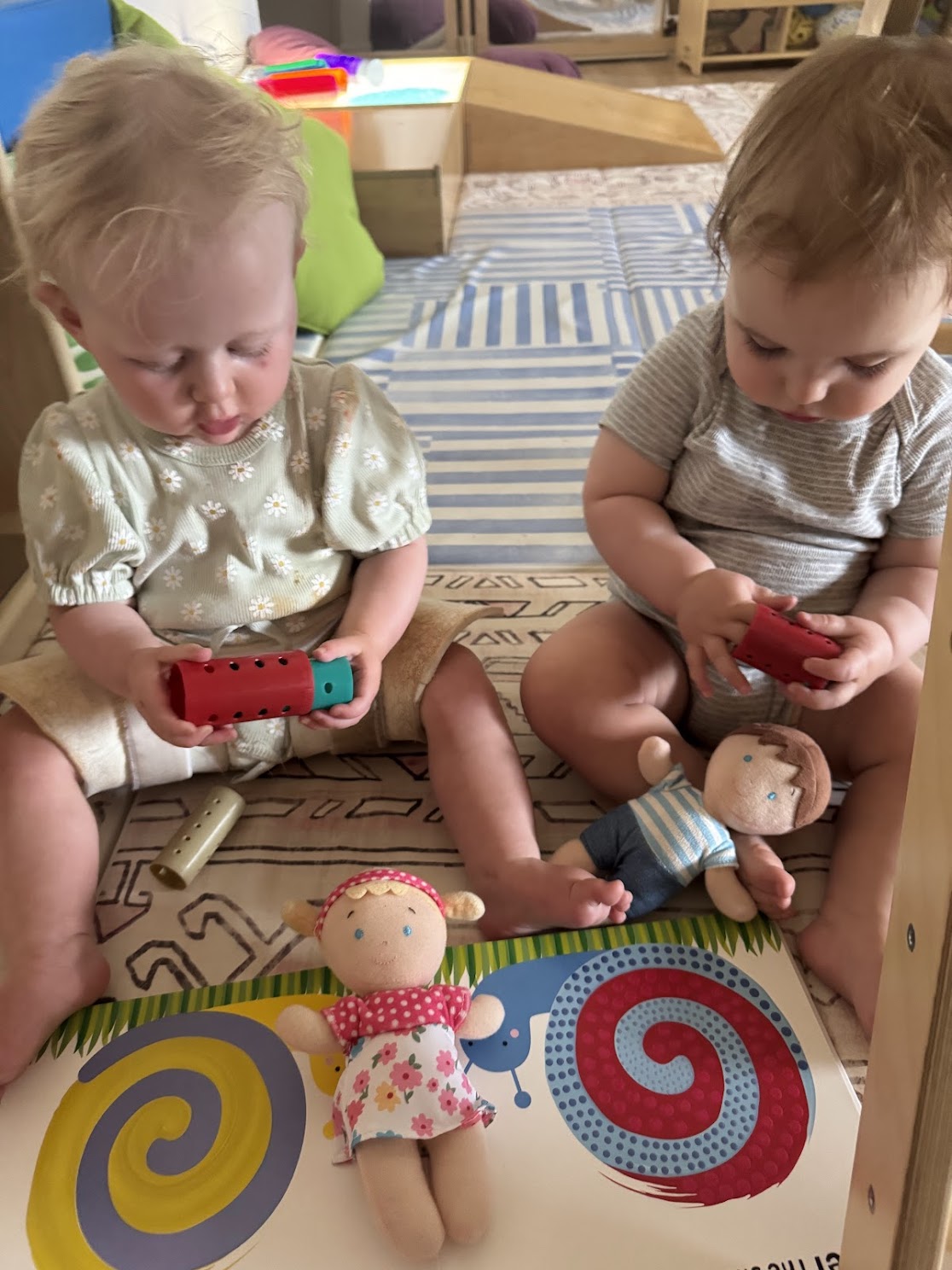
On a different occasion, Anne uses her same technique to combine the materials, bigger on top and smaller on bottom, holding both vertically. Maybe this method gives her a preferred perspective to the curlers coming together. She works hard to stabilize the two while also guiding them into position. Orson then joins in, with a different strategy. He holds the two horizontally with his hands on the ends. This prevents the smaller curler from sliding out directly after inserting it, a problem Anne had faced in her explorations.
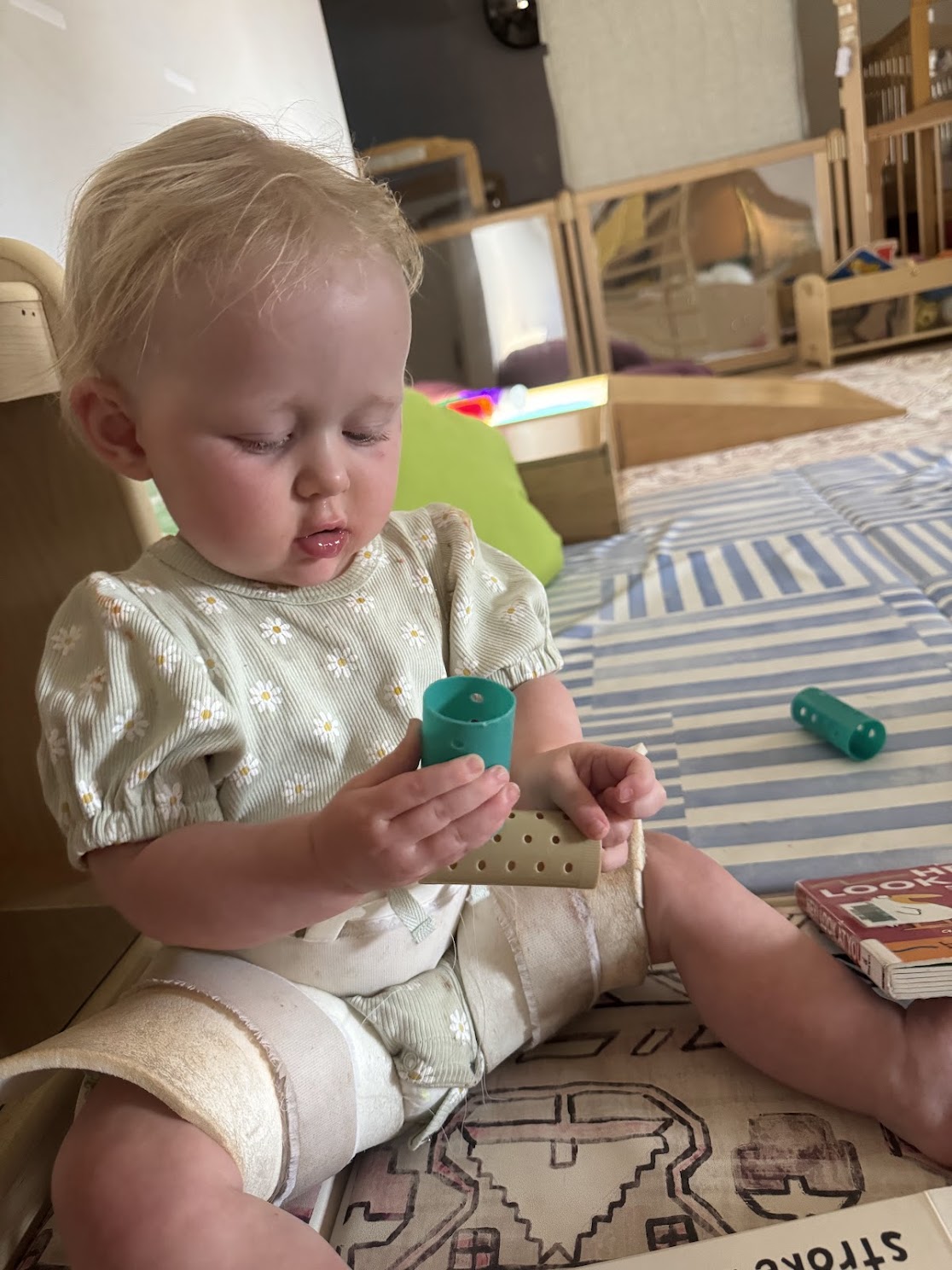
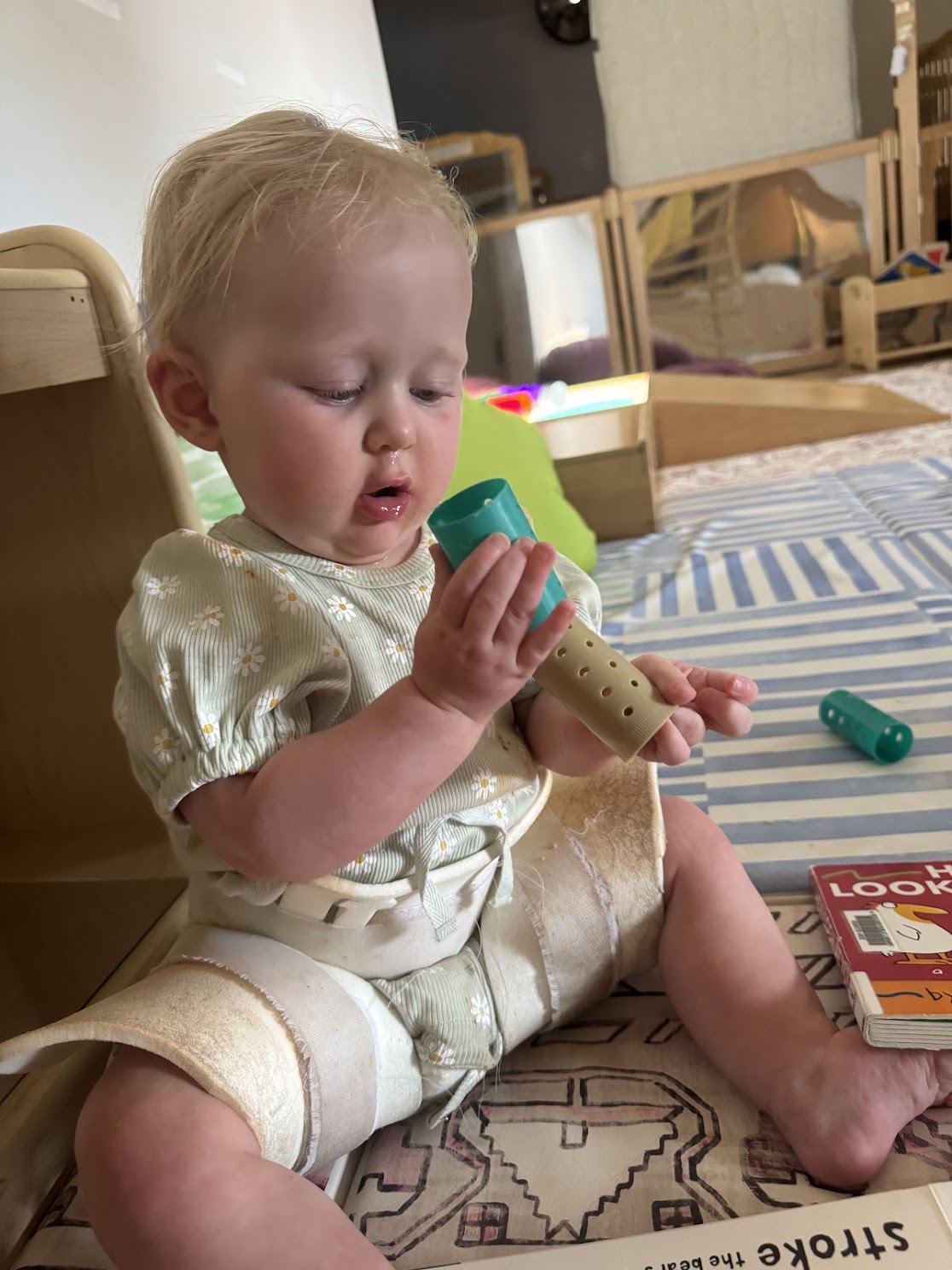
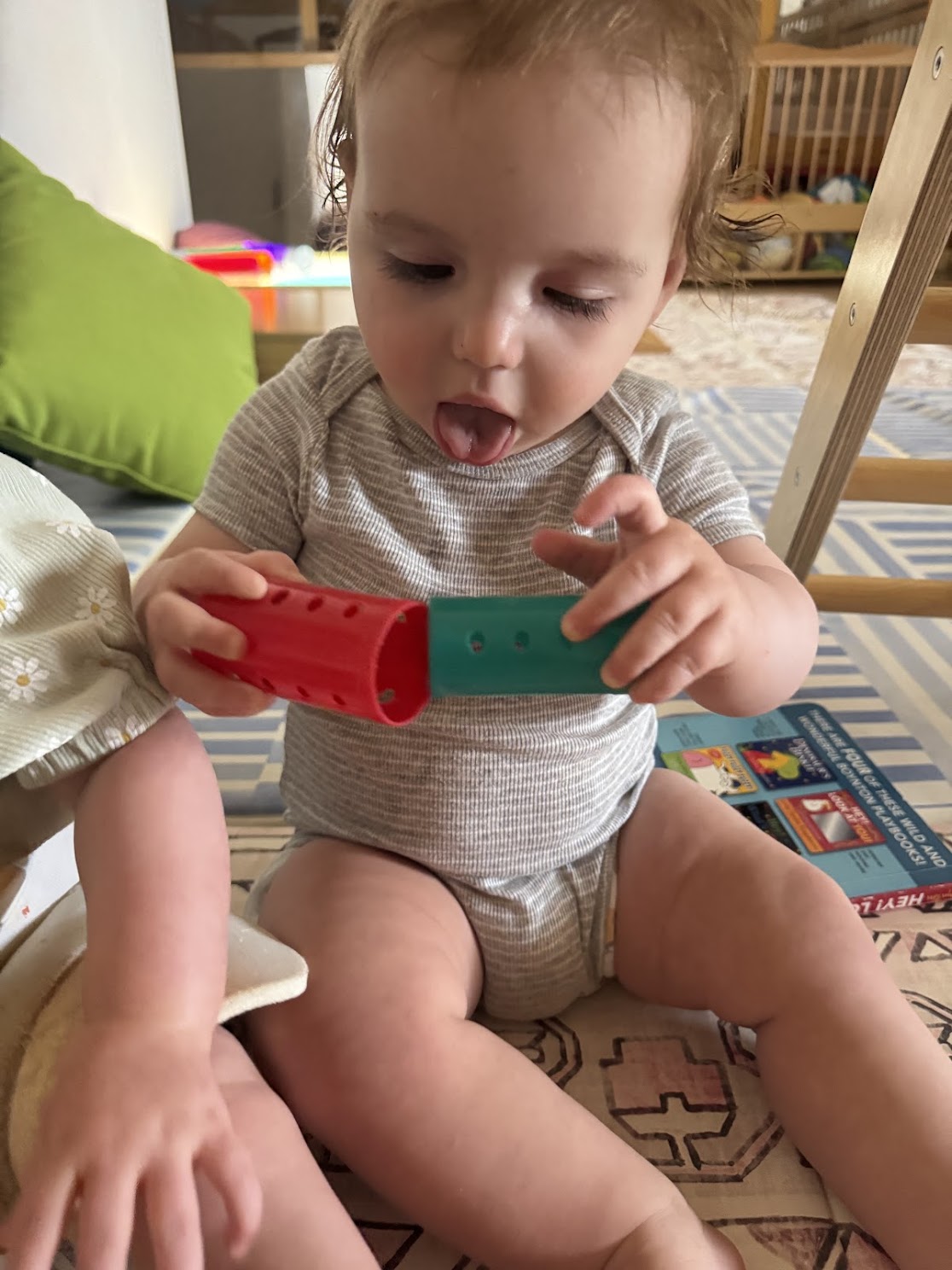
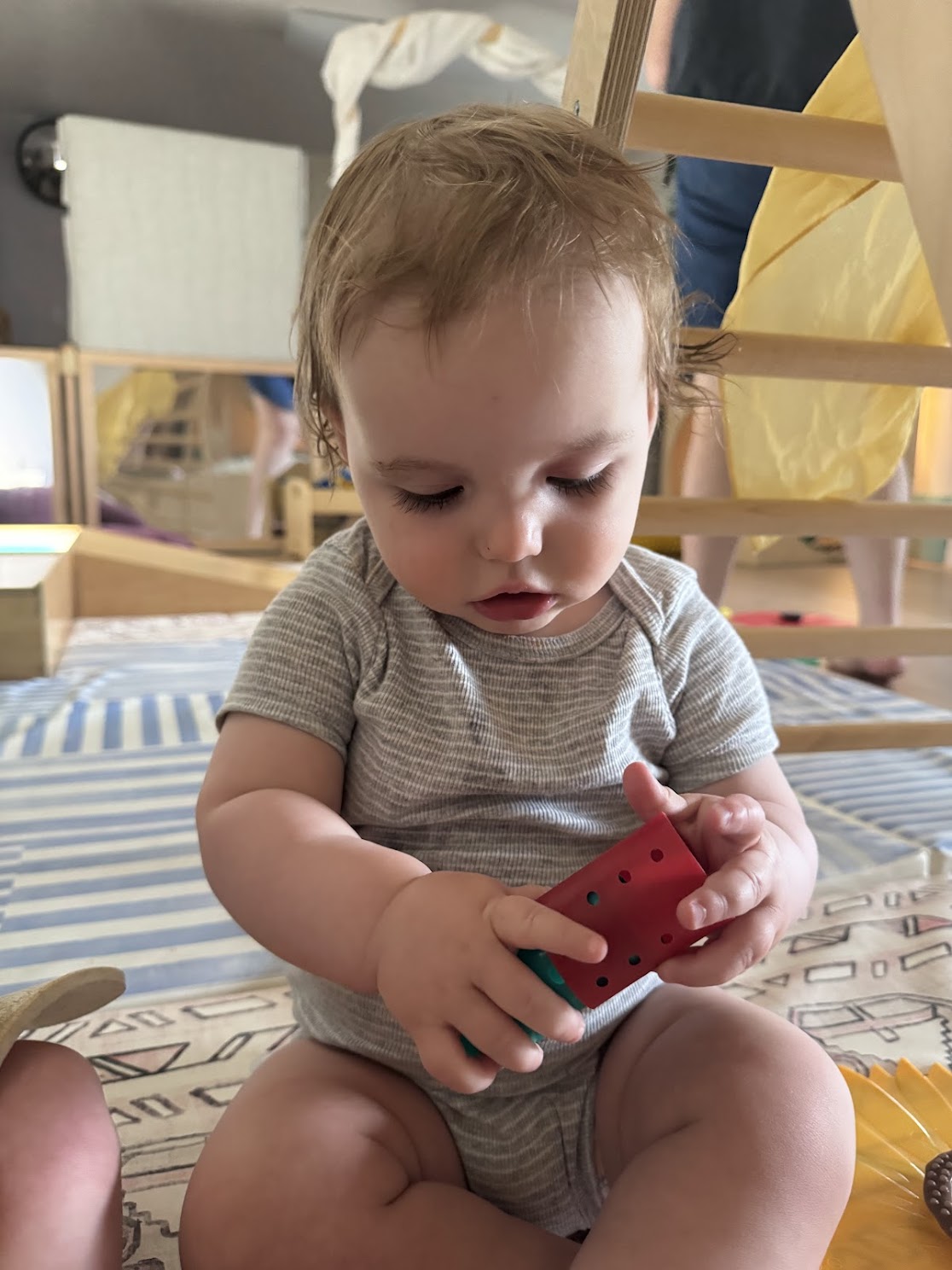
Sitting next to each other, Anne peaks at Orson’s work. Orson attempts to push the smaller curler on top of the bigger, causing it to slip. As Orson continues to work, Anne drops her tan curler and grabs a red one, potentially to match Orson’s materials. She then does his method, holding them horizontal, sliding the curlers in and out with much more ease than before. Imitation is a powerful tool that infants use to extend outside their zone of proximal development. Group care allows opportunities for infants to learn from their peers in their own unique ways, rather than be being shown by a caregiver.