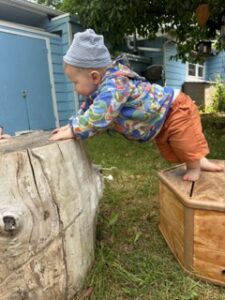
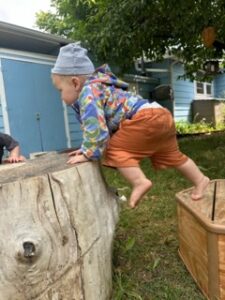
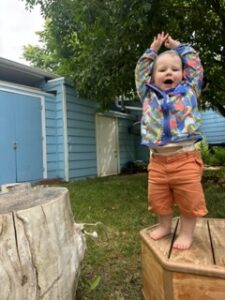
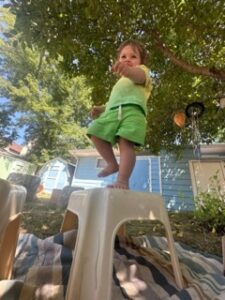
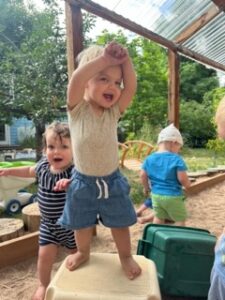
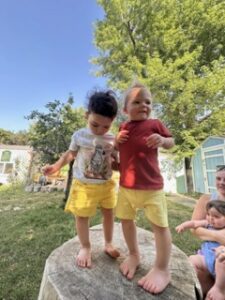
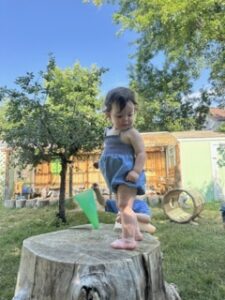
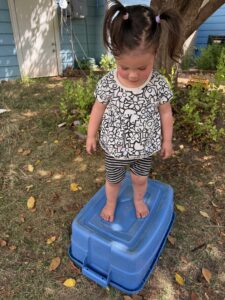
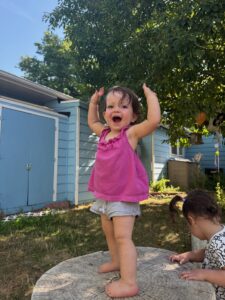
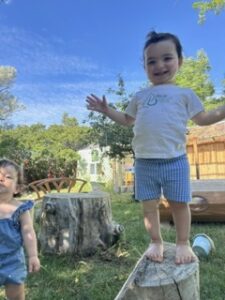
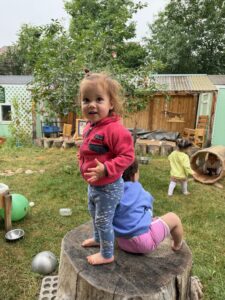
First through big body movements, then connections to broader frameworks, the children have explored the idea of what it means to be “up high”. This concept began as a message of caution while testing bodily limits, and evolved into an exclamation of accomplishment. It quickly transitioned to something more complex.
Initially, this message came from teachers early on in the infant room to support the then-infants with proprioception as they were navigating climbing classroom structures. Through their initiation into the toddler space, the children have expanded their play to include the “up high” concept in various ways, methodically deconstructing this idea to understand it on a deeper level.
According to our class, what can be “up high”?
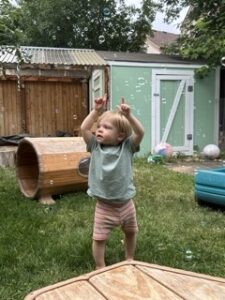 . Bubbles
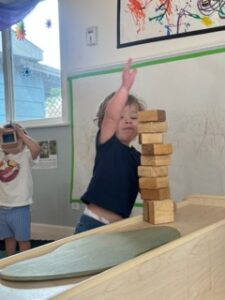 . Blocks
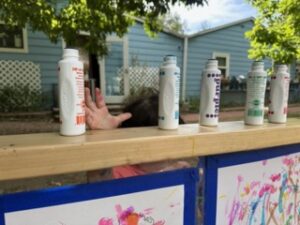 . Mark Makers
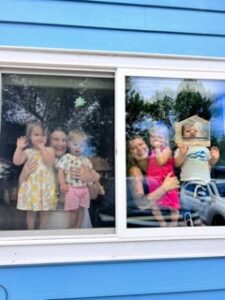 . Classmates
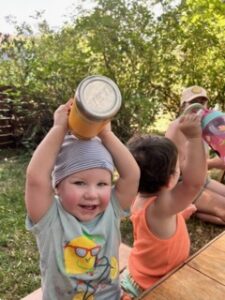 . Water Bottles
How does it feel to be “up high”?
Surprising, Exciting, Dancey, Silly, Unsure, Elating, Unsteady
The initial message of “up high”, a calling of attention to children’s bodies in space, allowed the children to notice their surroundings. From an awareness of the intersection of self and landscape, a deeper noticing of learning protagonists emerged; a contextual landscape was born. The children now not only notice when characters in their learning stories are “up high”, they now have expanded their understanding to wonder about them.
Where are you going?
What are you doing?
Who are you?
How are you feeling?
These contextual wonderings translate to a classroom of children that are:
aware, curious, poetic, brave, imaginative, in-tune, and community minded.
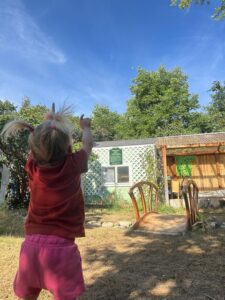 . “The moon! Up high!”
–Willow, 22 months