Summary
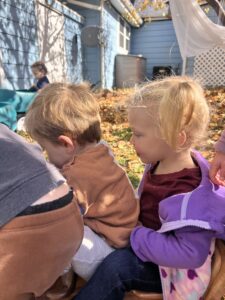
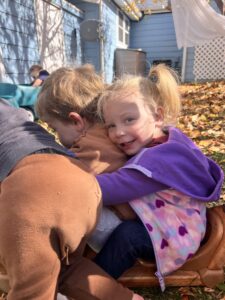
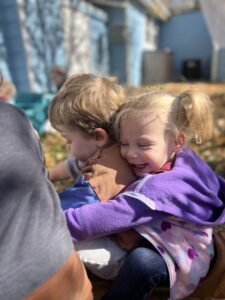
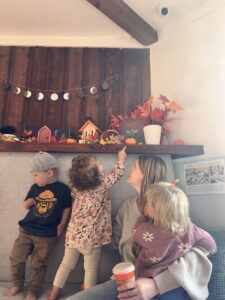
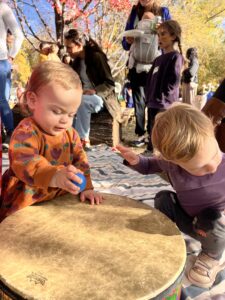
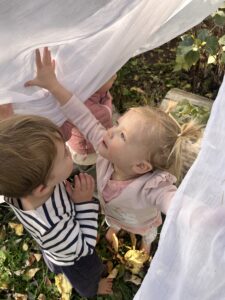
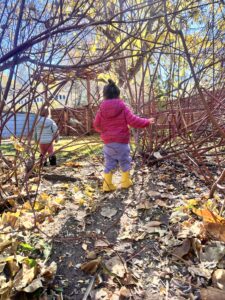
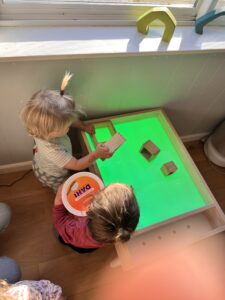
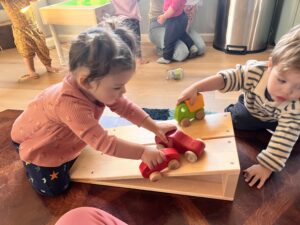
I’ve been noticing how the change in season gently shapes our days in the toddler classroom, inspired by Mary Oliver’s poem Song for Autumn. We’re spending more time in cozy indoor corners; reading, building, and exploring the colors and textures of fall. Outside, we are bundled-up explorers in puffy coats and small hats, crunching through leaves and feeling the crisp wind on our cheeks. Like the poem, we’re learning to move with the season, slowly, warmly, and full of wonder.
Song for Autumn
In the deep fall don’t you imagine the leaves think how comfortable it will be to touch the earth instead of the
nothingness of air and the endless freshets of wind?
And don’t you think the trees themselves, especially those with mossy, warm caves, begin to think of the birds that will come – six, a dozen – to sleep inside their bodies?
And don’t you hear the goldenrod whispering goodbye, the everlasting being crowned with the first tuffets of snow?
The pond vanishes, and the white field over which the fox runs so quickly brings out its blue shadows. And the wind pumps its bellows. And at evening especially, the piled firewood shifts a little, longing to be on its way.
by Mary Oliver
 .
.  .
. 
Fall has invited us to take on a slower, cozier tempo. Mornings begin in soft light and crisp air, and our routines have naturally adjusted. These changes give the toddlers a sense of time and pattern: they begin to notice transitions and how the world moves, independently of us. Through their observations, our students are building a foundation of temporal awareness and adaptability.
 .
.  .
. 
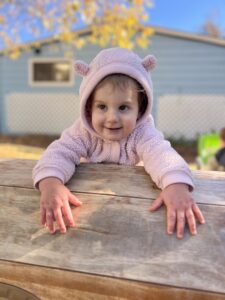
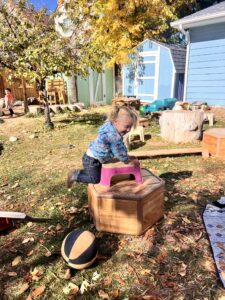
As our available time outside shortens, our focus has shifted to large motor play inside. We are diving in the chunk, running while holding hands, and dancing together! Jumping, climbing, spinning, and balancing are essential for regulation and spatial understanding. Big body movement supports not only physical development but also emotional well-being.
 .
.  .
. 
The cooler weather gives us daily opportunities to practice self-help skills. There are a few more steps to making it outside when it gets colder, and we encourage the children to participate in these steps. Zipping jackets, putting on shoes, and noticing when we feel cold or warm all support autonomy and bodily awareness.
 .
.  .
.