Summary
The poem "Don't Rush Me, Please" speaks to a way of being with children: unhurried, present, and open to where their wonder takes us. Like the snail, the children move slowly, exploring with care and intention.
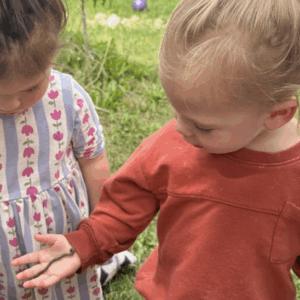
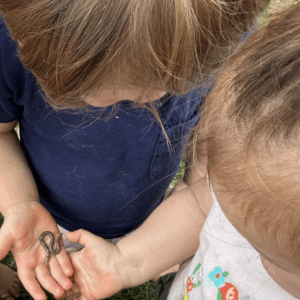
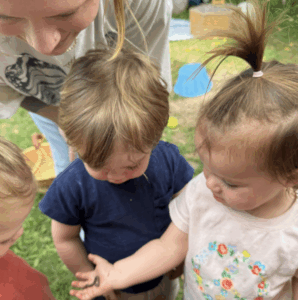
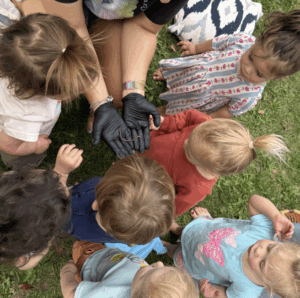
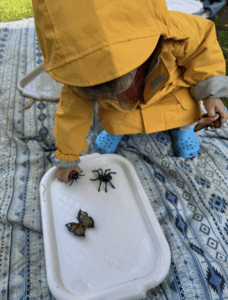
A couple of weeks ago, I discovered a worm wriggling through toddler yard, who had made his way onto my toe. I called to the children, “There is a worm on my toe! Does anyone want to see?” Everyone gathered, and we all got the opportunity to take a closer look at Mister Wormy. It was a small moment that sparked big curiosity; we paused, observed, and followed their lead. The toddlers were clearly excited, but did a great job staying composed as they took turns holding the worm. They moved carefully and gently, showing wonder and curiosity without getting too loud or rushed.
 .
.  .
.  .
. 
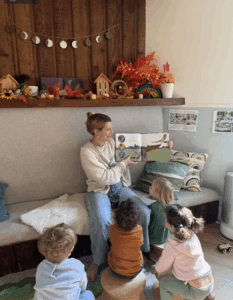
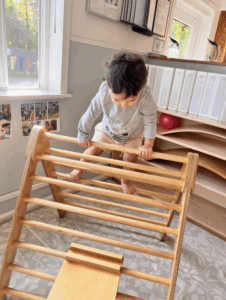
The following poem, “Don’t Rush Me, Please,” mirrors what we witness daily in our environment: the power of patience, presence, and child-led discovery. Just like the worm, toddlers thrive when they’re given time to explore, to wonder, and to make sense of their world without the pressure of adult-driven timelines.
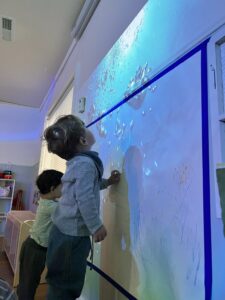
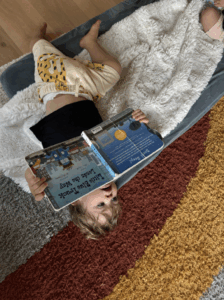
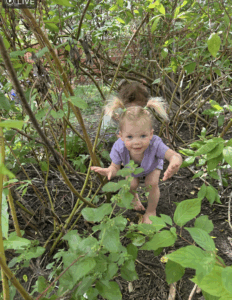
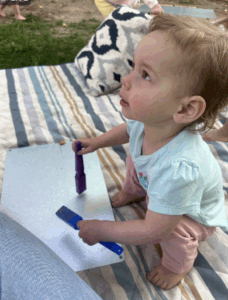
This approach reflects the heart of emergent curriculum and holistic learning. Rather than imposing a rigid structure, we respond to the children’s interests and rhythms. Each photograph we share tells a story of autonomy, connection, and engagement. They are windows into a learning journey that unfolds naturally, guided by the voice of your children, and supported by intentional observation.
“Don’t Rush Me, Please”
I am a snail—Don’t rush me, please.
I’m heading for those cherry trees.
I have no place I have to be,
No pressing thing I have to see.
I like this speed; I like being slow;
It gives me time to get to know all the flowers that I pass,
every blade of every grass.
I am a snail; this is my way.
Don’t rush me, please. We’ve got all day.By Barbara Vance
Excerpt from the poetry collection “Suzie Bitner Was Afraid of the Drain”
 . \
. \ \
\  .
.